
Lotilko Programme
The Lotilko Program is MURMO’s comprehensive, long-term therapeutic program for children and young people aged 9–18 who experience chronic mental health difficulties. Through art therapy, psychotherapy and family support, the program helps children and their families move towards greater stability in everyday life.
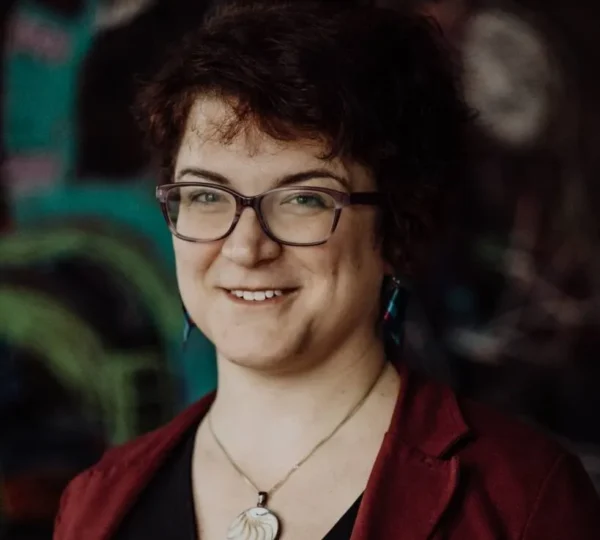
Dr. Mária Sonnevend
Head of Department
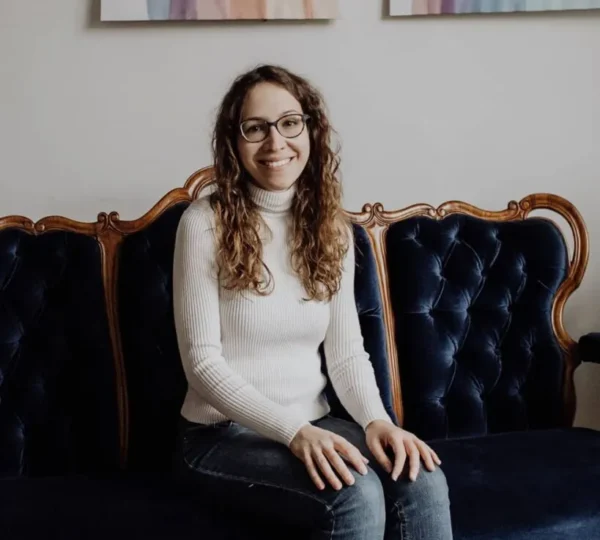
Kata Nagy
Deputy head of department
Lotilko Programme
Lotilko Programme
A programme of the Pro Juventa Foundation at the MURMO Clinic A comprehensive, multi-level therapeutic programme for children, adolescents and their families living with chronic, severe mental health difficulties.„I give a child wings, then teach them how to fly with their own.”
Gabriel García Márquez: The Puppet
About the Lotilko Programme
Child and adolescent psychiatric care, with an emphasis on psychotherapy. Through the Lotilko Programme we offer comprehensive, long-term treatment to children, adolescents and their families who live with severe mental health difficulties. Our aim is to help mobilise each child’s hidden inner resources and healthy parts of the personality by means of combined psychotherapeutic methdods and multidisciplinary team work built on MBT-A, TFP-A, fine-art and drama elements, and by involving the family in a therapeutic, educational and supportive way. We can achieve this if the child receives support on several levels at once – the individual, group and/or family therapy set out in our professional recommendation – and enters the programme following a thorough assessment. The clinical work is delivered by the MURMO team and the associated external specialists; the programme is supported by the Pro Juventa Foundation. A small part of the programme is fully subsidised; for some elements a subsidy may be requested, while for others no reduction is available.Therapy groups by age
Four child and adolescent psychiatric therapy groups, with a psychotherapeutic focus. The children joining a group are carefully selected by our specialists; placement is based not solely on age but on developmental and therapeutic needs, so there is a natural overlap between the age bands. Our clinical groups are of mixed composition, with a maximum of 8 members.
Varázsdoboz — ages 9–12
Szabad Kikötő — ages 12–14
Grund — ages 14–16
Kilátó — ages 16–18
What the programme involves
Each child’s individual schedule is put together from the elements below on the basis of our professional recommendation. For the fees, the three figures indicate the subsidised / standard / supporter fee (2026/2027).1. Psychotherapy group
The age-appropriate therapy group meets once a week (2 therapy hours, 90 minutes), led by two therapists. The group is accompanied by an opening, a winter and a spring parent consultation, and at the end of the year by an end-of-phase session at which a comprehensive programme-closing report is handed over.2. Individual therapy
One (or, where needed, two) therapy hours a week, together with the accompanying parent consultation, which we usually hold every 4–6 weeks.3. Psychiatric follow-up
Children and adolescents in the programme receive psychiatric follow-up and, in certain cases, medication support. Follow-up sessions last 30 minutes. Anyone who has not yet had a psychiatric assessment must attend an initial 50-minute assessment at the start of the process. In the event of a crisis, or during medication titration, the consultant may prescribe closer monitoring.4. Parents’ group
A 5-session supportive parents’ group (75 minutes) that accompanies the comprehensive therapies; its aim is to seek resources and to support one another. Each parent attends a separate group, the groups are led by two therapists, and the maximum size is 10.5. Parents’ educational club
Online psycho-educational events, at least three of which parents in the programme are required to attend. We explore – at a depth prepared for parents – topics such as internet addiction, abuse, eating disorders, emotion regulation, and self-harm and suicidal risk in adolescence. The sessions are linked to the podcasts on MURMO’s YouTube channel.6. Family-level work
On the basis of the team’s professional recommendation, either family therapy (90 minutes every two weeks) or family consultation (60 minutes, monthly). Their aim is to help families gain insight into the role of family functioning in the emergence and maintenance of difficulties – and equally in recovery.7. Coping skills training
Training that develops coping skills: over the course of the year, 3 sessions for parents and 3 for the adolescents, with two specialists. It is built into the schedule where the individual plan calls for it.8. Further sessions arising during the year
Where needed, a milestone consultation with 2–4 specialists during the year, as well as consultations and diagnostic sessions as required.Fees — what you can choose from
For the elements eligible for support, you may choose from three types of fee:- Subsidised fee: the Foundation and the specialists both contribute to the cost, and there is own funding within the fee as well. Please choose it only if you could not otherwise take part – so that other families may have a place too.
- Standard fee: I am not requesting a subsidy and am not able to give one; I pay the full fee.
- Supporter fee: I should also like to support another child’s therapy, so I pay a little more.
Schedule — 2026/2027
- September 2026 – initial interviews and clarifying the framework
- 1 October 2026 – 31 May 2027 – the comprehensive therapeutic phase
- June 2027 – shared feedback and closure
- July 2027 – handover of summaries, closing of individual processes
- August 2027 – break and rest
The framework of our work together
- The programme calls for full commitment; attendance at each therapeutic element is required. In the event of illness or a family trip, a session may be made up – by prior arrangement (this does not apply to the groups or the educational events).
- In case of illness we also welcome the client to take part online; each therapist will arrange the details separately. Online participation in group sessions is limited.
- The groups are designed for work carried out in person, but we switch to an online format where necessary.
- For the duration of the programme, members may not meet in online spaces – apart from any online therapy sessions – and may not form close friendships or romantic or intimate relationships.
- For the sake of recovery, the therapists involved work with extended confidentiality, co-operating with one another; the confidentiality standards of healthcare provision apply throughout.
- The progress of the programme is followed by the MURMO team at weekly – and in several cases daily – case discussions, accompanied by supervision.
How the programme begins — applying
You can apply to the age groups only through the Lotilko Programme, with a child and adolescent psychiatric discharge summary or outpatient record, or with an internal MURMO team recommendation. Please attach any previous hospital discharge summaries, assessment materials and test results. Joining follows a thorough assessment; we also confirm our comprehensive work together in a written agreement.
Applications and enquiries:
lotilkoadmin@murmo.hu
Location:
Budapest, District XII, Győri út 2/c, 2nd floor.
The programme is supported by:
the Pro Juventa Foundation —
www.projuventa.hu